
Liability-Only vs Full Coverage Car Insurance — Alaska
Free to compare
The Coverage Decision Across Multiple Vehicles
You own two or more vehicles in Alaska and you're structuring coverage across all of them. The state requires $50,000 bodily injury per person, $100,000 per accident, and $25,000 property damage on every car you register. That liability-only floor keeps you legal, but it leaves gaps that hit harder when you're insuring a household fleet: one at-fault accident can total a vehicle you still owe money on, and Alaska's 12.5% uninsured-motorist rate means the driver who hits your parked car may carry nothing.
The liability-versus-full-coverage decision isn't binary across your household. Most multi-vehicle families split coverage by vehicle value and use case: full coverage on the financed daily driver, liability-only on the older paid-off truck, comprehensive without collision on the rarely-driven third car. The structural question is which vehicles justify the added premium for physical-damage protection, and which don't.
“Alaska's 12.5% uninsured rate means one in eight drivers carries nothing, and liability-only leaves your own vehicle's damage entirely on you.”

Meet Alaska's Requirements Without Overpaying
Get My Alaska Car Insurance Quote12.5%
Alaska Uninsured Motorist Rate
One in eight drivers on Alaska roads carries no insurance. When an uninsured driver causes a collision that totals your vehicle, liability-only coverage pays nothing for your own car's damage.
Insurance Information Institute, 2023
What Liability-Only Actually Covers
Liability-only means you carry the state's required minimums and nothing else. Your policy pays for damage and injury you cause to others: the other driver's medical bills up to $50,000 per person and $100,000 per accident, and their vehicle or property damage up to $25,000. It does not pay to repair or replace your own vehicle after a collision, regardless of fault. It does not pay if your car is stolen, vandalized, or damaged by weather, fire, or an animal strike.
Alaska does not mandate personal injury protection or uninsured motorist coverage, so liability-only policies exclude both unless you add them. That means your own medical bills after an at-fault crash come out of pocket or through health insurance, and damage from an uninsured driver leaves you with no recovery path unless you carry uninsured-motorist property damage as an optional add-on.
If replacing the car out of pocket would strain your budget, liability-only is a structural mismatch.
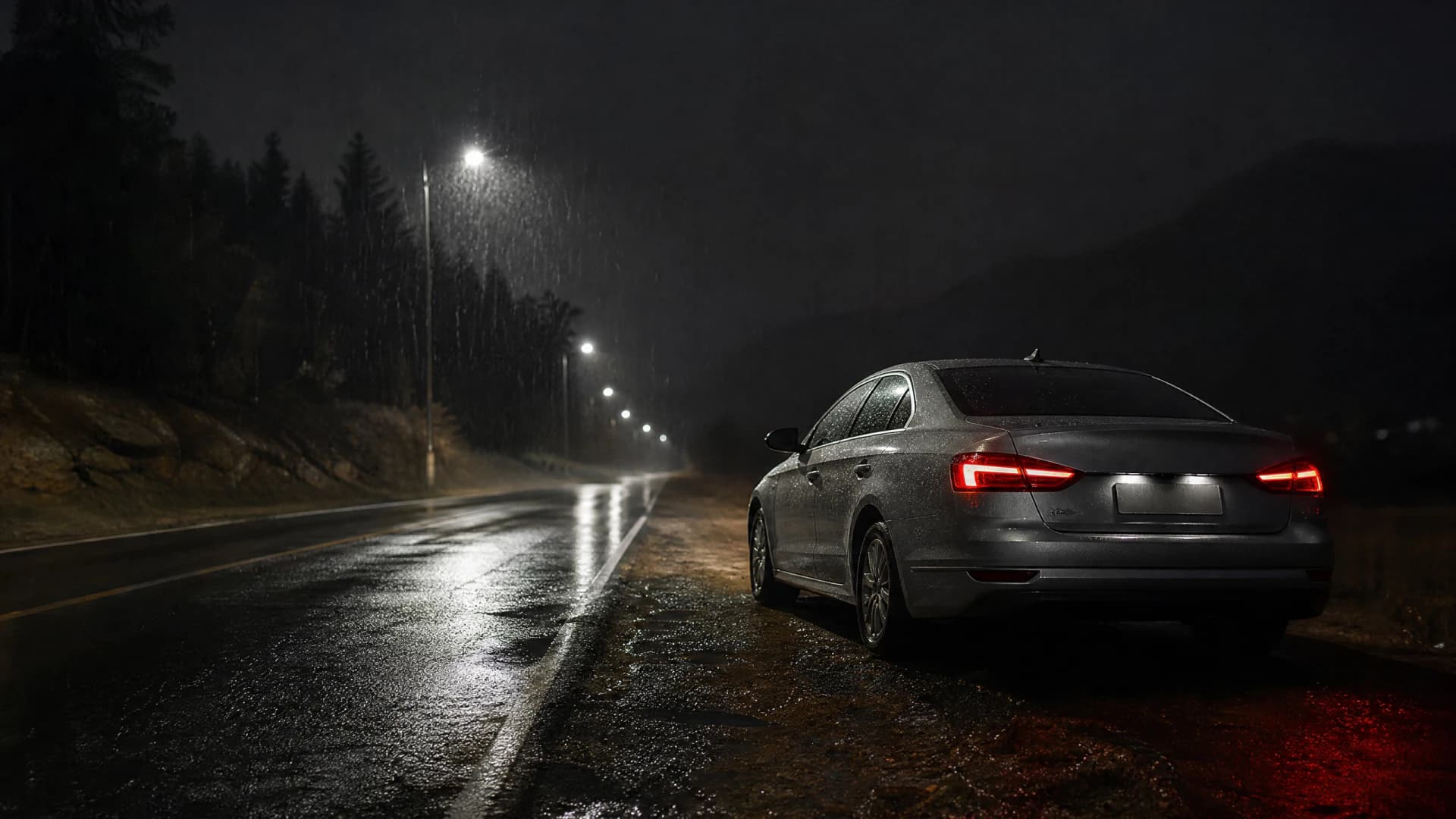
Alaska's 247 vehicle thefts per 100,000 residents and winter weather exposure make comprehensive coverage a structural necessity on financed vehicles, even when collision isn't.


Structuring Coverage Across Your Household
Most Alaska households with three or more vehicles carry full coverage on one or two and liability-only on the rest. The decision hinges on loan status, vehicle value, and how often each car is driven. A financed vehicle requires comprehensive and collision until the loan is paid off. A vehicle worth less than twice your collision deductible makes collision premium hard to justify, but comprehensive may still be worth carrying for theft and weather risk.
Alaska's fault system is traditional tort: the at-fault driver's liability coverage pays for damage they cause. Collision coverage pays your own damage regardless of the other driver's limits. Underinsured-motorist property damage is an optional add-on that fills the gap when the at-fault driver's liability limit falls short; not all carriers offer it in Alaska, and it typically requires you to carry collision first.
For households managing multiple vehicles on one policy, splitting coverage by vehicle is standard. The daily-driven financed SUV carries full coverage with a $500 deductible. The paid-off older sedan the household uses for errands carries comprehensive with a $1,000 deductible but drops collision. The project truck that moves twice a month carries liability-only. The multi-car discount applies to the entire policy regardless of how coverage is split across vehicles, so structuring this way does not forfeit the household discount.
When adding a newly-purchased vehicle mid-term, most carriers extend your existing coverage level to the new car automatically for a grace period, typically 14 to 30 days. If your existing vehicles carry full coverage, the new car is covered at that level during the grace window. If your existing vehicles carry liability-only, the new car receives liability-only during the window. You must contact the carrier within that period to finalize coverage on the new vehicle and adjust the level if needed. Missing the window can leave the new car uninsured or covered at a level that does not match your loan requirement.
$50,000 / $100,000 / $25,000
Alaska Liability Minimum
Alaska requires $50,000 bodily injury per person, $100,000 per accident, and $25,000 property damage on every registered vehicle. Liability-only meets this floor but pays nothing for your own vehicle's damage.
Alaska Division of Motor Vehicles

When Liability-Only Leaves You Exposed
Liability-only coverage produces three failure modes that hit multi-vehicle households harder than single-car drivers. First, an at-fault crash totals your vehicle and you have no collision coverage: the car is gone, you still owe the loan if financed, and your policy pays nothing toward replacement. Second, an uninsured driver hits your parked car and flees: you have no uninsured-motorist property damage coverage, so the repair cost is entirely yours. Third, your vehicle is stolen from your driveway: you have no comprehensive coverage, so the loss is uninsured. Alaska's 12.5% uninsured rate and 247 thefts per 100,000 residents make the second and third scenarios common enough that liability-only on a vehicle worth more than a few thousand dollars is a structural gamble.
For financed vehicles, the lender's requirement for comprehensive and collision is non-negotiable. Dropping to liability-only while a loan is active violates the loan agreement and triggers force-placed insurance from the lender at a premium often two to three times higher than voluntary coverage. For owned vehicles, the decision is yours, but the math is straightforward: if you cannot replace the vehicle out of pocket, liability-only transfers that replacement risk entirely to you.
Compare Carriers Writing Your Household
Alaska's carrier roster includes 14 insurers writing multi-vehicle policies statewide: Allstate, Amica, Country Financial, CSAA, Farmers, Geico, Hartford, Liberty Mutual, National General, Progressive, State Farm, The General, Travelers, and USAA. Not all carriers offer the same coverage options or multi-car discount structure. Some apply the discount per vehicle; others apply it to the policy base. Some allow you to mix coverage levels across vehicles on one policy with no restriction; others require all vehicles to carry the same liability limits even when physical-damage coverage varies.
When structuring coverage across multiple vehicles, request quotes that reflect your actual intended split: full coverage on Vehicle A, comprehensive-only on Vehicle B, liability-only on Vehicle C. The premium difference between carriers widens when coverage is mixed, because base rates and discount structures vary. A carrier with a lower full-coverage rate may have a higher liability-only rate, and the household total depends on how those rates combine across your specific vehicle mix. Compare the total annual premium for your entire household, not the per-vehicle rate in isolation.
What Full Coverage Adds
Comprehensive pays for non-collision damage: theft, vandalism, fire, glass breakage, animal strikes, and weather damage including hail and flooding. Alaska's vehicle-theft rate sits at 247 per 100,000 residents, and winter conditions produce frequent windshield cracks and animal collisions on rural highways. Comprehensive coverage pays actual cash value minus your deductible, regardless of fault. For a financed vehicle, your lender requires it. For an owned vehicle, it's a decision based on replacement cost versus premium.
Collision pays to repair or replace your vehicle after a crash with another car or object, regardless of who caused it. You pay your deductible; the insurer pays the rest up to actual cash value. Collision matters most on vehicles you drive daily in traffic-heavy areas or on icy roads where at-fault risk is high. On a rarely-driven third car or a beater worth less than twice your deductible, collision premium often exceeds the coverage's value. Comprehensive without collision is a common middle path: you're covered for theft and weather, but not for crash damage you cause yourself.
Get Your Free Quote
Get My Alaska Car Insurance QuoteFrequently Asked Questions
Can I carry liability-only on one vehicle and full coverage on another in the same household policy?
Yes. Most Alaska carriers allow you to structure coverage differently across vehicles on the same multi-car policy. You can carry full coverage on a financed daily driver and liability-only on an older paid-off vehicle. The multi-car discount applies to the entire policy regardless of how coverage is split.
Does Alaska require uninsured motorist coverage?
No. Alaska does not mandate uninsured or underinsured motorist coverage. You must add it as an optional coverage if you want protection when an at-fault driver carries no insurance or insufficient limits. With 12.5% of Alaska drivers uninsured, this optional coverage closes a significant gap.
What happens if I drop collision on a financed vehicle?
Your lender will place force-placed insurance on the vehicle at a premium typically two to three times higher than voluntary coverage. The force-placed policy protects the lender's interest, not yours, and you pay the inflated premium on top of your existing liability coverage. Comprehensive and collision are required until the loan is paid off.
How does Alaska's fault system affect the liability-only decision?
Alaska is a traditional tort state: the at-fault driver's liability coverage pays for damage they cause. If you carry only liability and you cause a crash, your policy pays nothing for your own vehicle. If another driver hits you and they carry only the state minimum $25,000 property damage limit, and your car is worth more, you absorb the gap unless you carry collision or underinsured-motorist property damage.
Is comprehensive coverage without collision worth carrying on an older vehicle?
Often yes in Alaska. Comprehensive covers theft, vandalism, weather damage, and animal strikes. Alaska's 247 vehicle thefts per 100,000 residents and frequent winter weather make comprehensive valuable even on older vehicles. Collision premium on a low-value car often exceeds the coverage's benefit, but comprehensive premium stays lower and addresses risks that remain high regardless of vehicle age.
What is the typical deductible for comprehensive and collision in Alaska?
$500 or $1,000 deductibles are standard. Choosing a higher deductible lowers your premium but increases your out-of-pocket cost after a claim. For households with multiple vehicles, setting a higher deductible on rarely-driven cars and a lower deductible on daily drivers balances premium cost against claim risk.