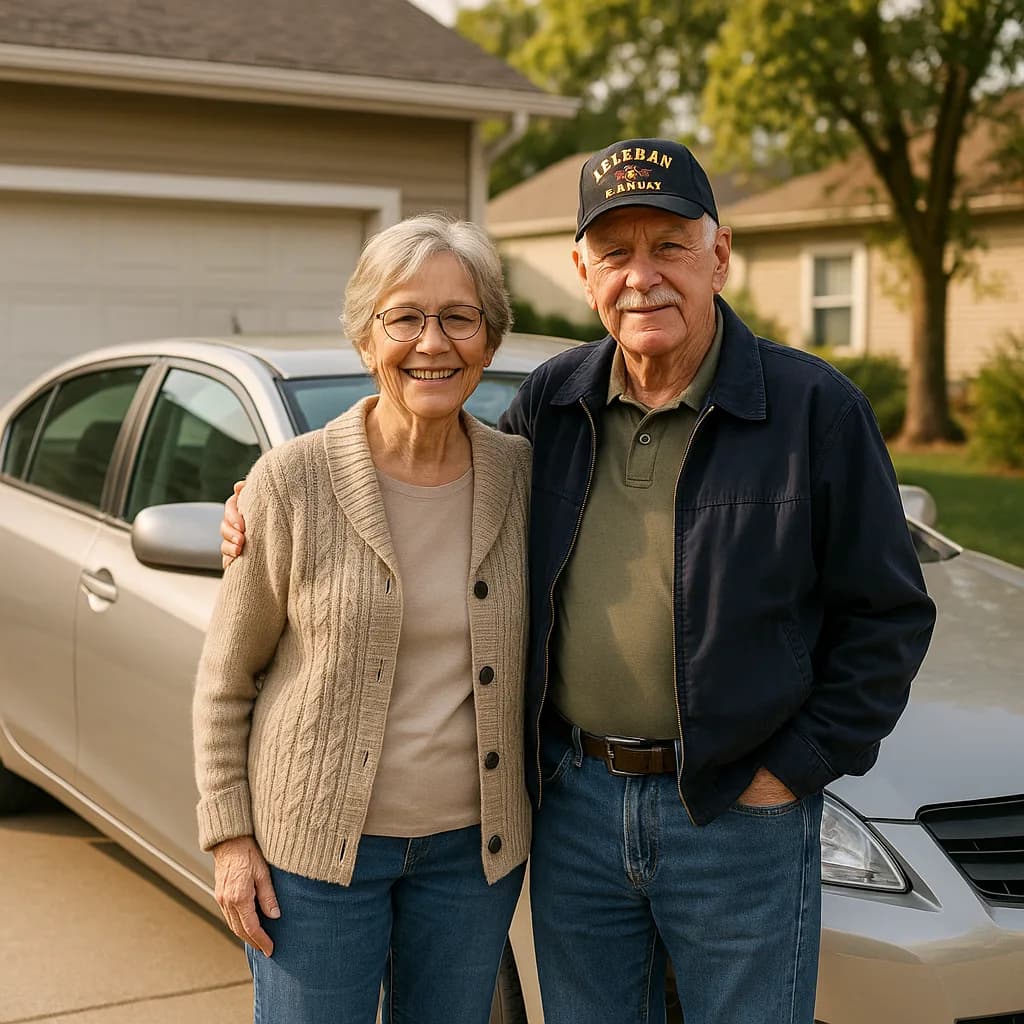
Alaska Senior Renewal Changes Multi-Vehicle Coverage Timing
You turn 69 this year, your household insures three vehicles on one policy, and you just learned Alaska requires you to renew your license in person with a vision test at every renewal from now on. The five-year renewal cycle stays the same, but the convenience of online or mail renewal disappears. That change affects how you time coverage decisions across your household's vehicles, especially if your spouse or household member also drives and holds a separate renewal schedule.
Alaska's senior renewal rule kicks in at age 69. From that birthday forward, you must renew in person and pass a vision test every five years. The rule applies to the driver, not the household, so if you and your spouse both drive vehicles on the same policy and you're both over 69, you each face separate in-person renewal windows. Multi-vehicle households often discover this rule only when the first renewal notice arrives, and by then the timing mismatch between drivers creates coverage coordination friction.
Compare car insurance rates in your state
Get quotes from licensed carriers — no obligation, no spam, results in minutes.
Get Your Free QuoteAlaska Senior Renewal Age
69
At 69, Alaska requires in-person renewal with vision test every five years. The five-year cycle does not shorten, but online and mail renewal options end permanently.
Alaska Division of Motor Vehicles
Multi-Vehicle Policies Require Every Driver Licensed
A multi-vehicle policy in Alaska covers every car your household owns on one shared policy, and the multi-car discount applies when all vehicles sit on that single policy. The discount mechanism requires every listed driver to hold a valid Alaska license. If your license lapses because you miss the in-person renewal window, the carrier can exclude you from the policy or cancel coverage on every vehicle until you reinstate.
That structural reality matters most in households where one driver is over 69 and another is not. The younger driver can still renew online or by mail, but the senior driver must schedule an in-person DMV visit. If the senior driver's renewal falls during a busy month and they delay, the lapse can trigger a policy-wide re-rating or exclusion that affects every vehicle on the policy, not just the car the senior driver uses most often.
Alaska does not allow a household to split vehicles across two policies to avoid this coordination problem and still keep the multi-car discount. The discount requires one policy. That means the household must manage every driver's renewal timing as a shared responsibility, not an individual task.
A lapsed senior driver license can exclude that driver from the entire multi-vehicle policy, re-rating every car or triggering cancellation until reinstatement.
Vision Test and In-Person Renewal Process

The vision test happens at the DMV office during your renewal appointment. Alaska does not accept external vision test results from optometrists or other providers for license renewal purposes. You must pass the test at the counter. If you wear corrective lenses, bring them. If you fail the vision test, the DMV will not renew your license that day, and you must return with updated corrective lenses or medical clearance. That delay can create a gap between your expiration date and your renewed license, during which you cannot legally drive any of your household's vehicles.
Schedule your in-person renewal appointment at least 30 days before your expiration date. Alaska DMV offices in Anchorage, Fairbanks, and Juneau handle the highest volume, and appointment availability tightens during summer months when seasonal residents return. If you live in a rural area served by a smaller DMV office, confirm the office offers vision testing on-site. Some rural offices operate on limited schedules and may require you to travel to a regional hub for the vision test component.
Related Articles




Carrier Response to Senior License Lapses
Carriers writing multi-vehicle policies in Alaska verify driver license status at renewal and sometimes mid-term. If your license lapses because you missed the in-person renewal window, the carrier receives notification from the state within 10 business days. The carrier then sends you a notice requiring proof of reinstatement within a set window, typically 15 to 30 days depending on the carrier's underwriting rules.
If you do not reinstate within that window, the carrier excludes you as a listed driver on the policy. That exclusion re-rates the entire policy because the carrier recalculates risk based on the remaining drivers and their records. In households where the senior driver has the cleanest record, removing that driver can increase the premium on every vehicle. If you are the only licensed driver in the household, the carrier cancels the policy outright.
The carrier will not restore you to the policy until you provide proof of the renewed license. That gap between lapse and reinstatement leaves your household's vehicles uninsured unless another licensed household member can be added as the primary driver during the interim.
Alaska License Reinstatement Fee
Reinstatement requires in-person DMV visit and passing the vision test.
Alaska Division of Motor Vehicles
Comparing Carriers for Senior Multi-Vehicle Households
Not every carrier writing multi-vehicle policies in Alaska handles senior driver lapses the same way. Some carriers offer a grace period after license expiration before triggering exclusion, while others enforce immediate exclusion once the state reports the lapse. That difference matters in households where the senior driver's renewal falls during travel or medical appointments that make in-person DMV visits difficult to schedule.
Carriers that write multi-vehicle policies in Alaska and offer online quoting include Allstate, Farmers, Geico, Progressive, State Farm, and USAA. Of these, USAA and State Farm operate in the preferred tier and typically offer the most flexible reinstatement windows for senior drivers with clean records. Geico, Progressive, and Farmers operate in the standard tier and enforce stricter timelines. The General and National General write non-standard policies and may exclude senior drivers with any lapse history, even if the lapse was administrative rather than violation-related.
Structure Your Household Coverage Around Renewal Windows
If your household insures multiple vehicles and you are approaching 69, confirm your current policy renewal date and your license expiration date. If they fall within the same 60-day window, contact your carrier now to ask whether they offer any flexibility on the license verification timing. Some carriers allow you to provide proof of a scheduled DMV appointment as temporary compliance while you wait for the in-person renewal.
If your spouse or household member also drives and is under 69, consider whether their license and driving record can carry the policy if your license lapses temporarily. Carriers allow you to designate a primary policyholder, and that designation determines whose license lapse triggers cancellation versus exclusion. Structuring the policy with the younger driver as primary policyholder gives the household more time to resolve a senior driver lapse without losing coverage on every vehicle.
Compare carriers before your 69th birthday, not after. Once you enter the senior renewal cycle, switching carriers mid-term can create timing mismatches between your new policy effective date and your next license renewal. Aligning your policy renewal and license renewal within the same calendar quarter simplifies coordination and reduces the risk of a lapse affecting your household's vehicles.